

Agri-PVTrendsEurope
Agri-PV: doubling land use across Europe
LH Energy May 14, 2026 6 min read
What is agri-PV
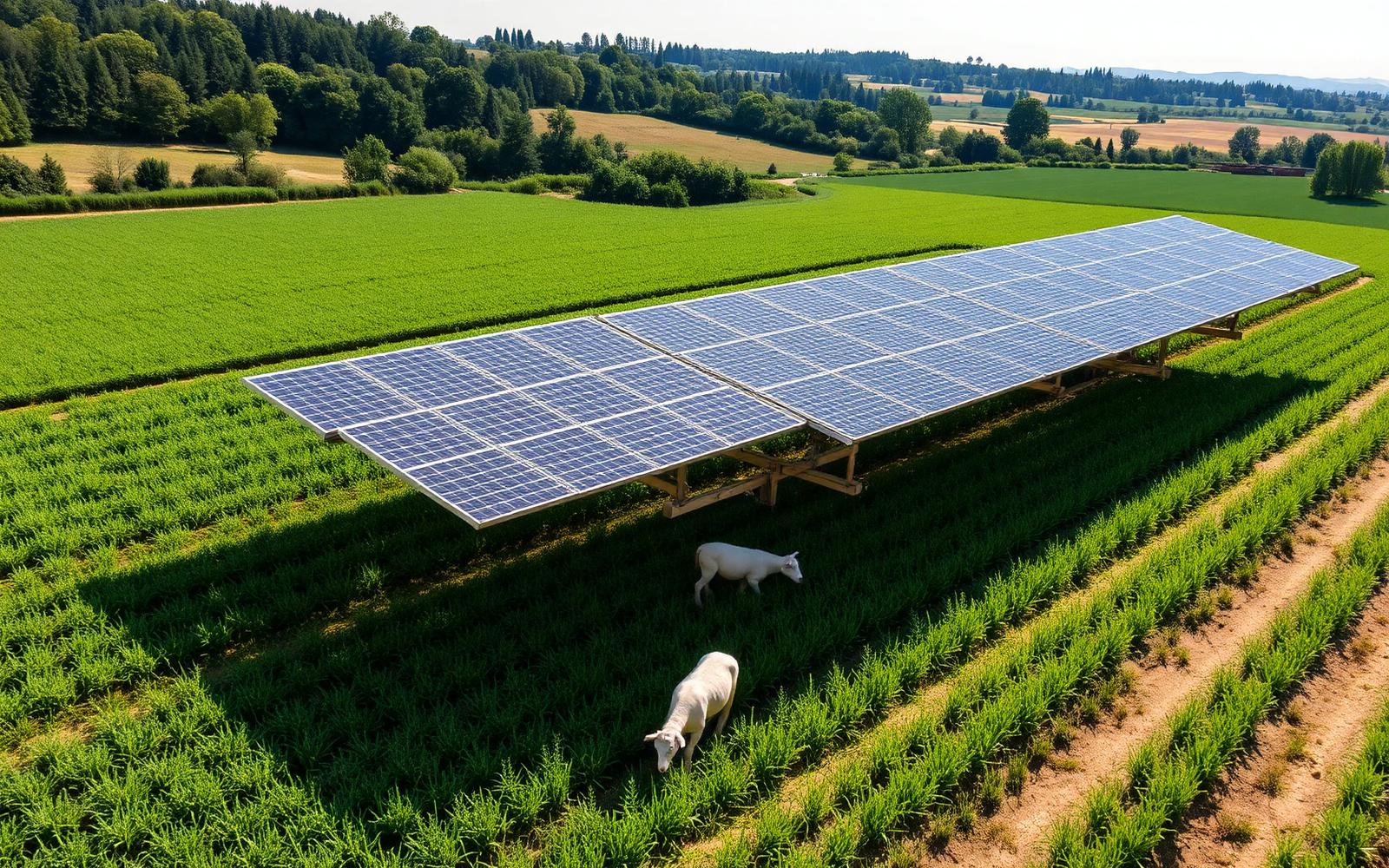
Agrivoltaics (APV) combines crop cultivation or animal grazing with solar power generation on the same plot of land. Modules are mounted either elevated above the crop (3–5 m) or vertically between strips of farmland.
Why dual-use makes sense
- For the farmer: stable income from land lease or shared PPA, protection of crops from extreme heat and hail, 15–30 % reduction in water evaporation.
- For the investor: cheaper land lease than classic ground-mount, easier permitting in countries with strict land protection (DE, FR, IT), positive PR.
- For the state: meeting REPowerEU targets without consuming high-quality arable land.
Technical solutions
At LH Energy we deliver three types of agri-PV substructures:
- Elevated tables above the crop — 3–5 m clearance, wide spacing, suitable for cereals, orchards, vineyards.
- Vertical bifacial tables — strips between fields, ideal for pastures and mowed grass.
- Solar pergolas over vegetables — lower structures for asparagus, berries, greenhouses.
Countries driving the segment
Germany (EEG 2023 grants an agri-PV bonus), France (CRE auctions reserve a share for agri-PV), Italy (PNRR programme), Netherlands and Austria. The CEE region is at the start of the curve but growing double-digits year-on-year.
Conclusion
Agri-PV is not a marketing label. It is a serious answer to the conflict between food and energy security. For a mounting contractor it means more complex logistics and taller substructures, but also longer-lived projects with better margins.