

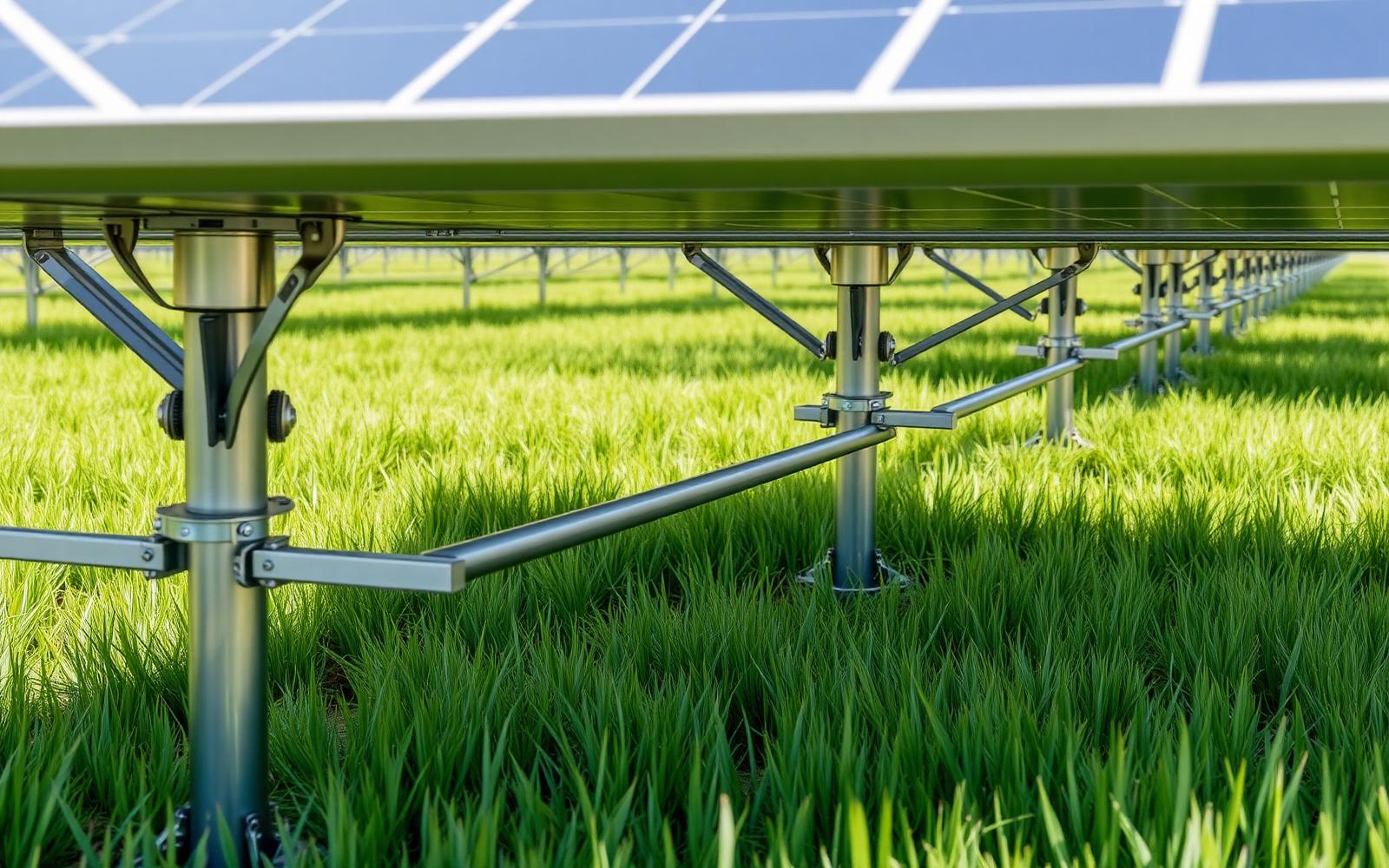
TechnicalSubstructureGround-mount
PV substructure: rammed posts, screw piles, or ballast?
LH Energy May 7, 2026 8 min read
Three technologies, one question
Every ground-mount PV plant rests on tables, and every table needs an anchor. Soil geology, schedule, and CAPEX drive the choice between three approaches.
1. Rammed posts
C- or I-profiles driven into the ground 1.5–2.5 m deep by a hydraulic pile driver. The fastest method — 600–1,200 posts per shift in good conditions.
- Pros: lowest cost per MWp, very fast, no concrete.
- Cons: needs cohesive soil free of large stones; bends or fractures in rocky ground.
2. Screw piles
A threaded steel pile spun into the ground by a rotary head.
- Pros: works in rocky or loose soil; reversible — the land stays intact; ideal for slopes and agri-PV.
- Cons: ~30–50 % more expensive than ramming; slower install rate.
3. Concrete ballast
Concrete blocks or precast elements anchoring tables by mass alone, without penetrating the soil.
- Pros: ideal for landfills, brownfields, or sites where the substrate must not be pierced.
- Cons: the most expensive option; heavy logistics; higher static demands on the table.
Decision matrix
| Factor | Ramming | Screw piles | Ballast |
|---|---|---|---|
| Cost | ⭐⭐⭐ | ⭐⭐ | ⭐ |
| Speed | ⭐⭐⭐ | ⭐⭐ | ⭐ |
| Rocky soil | ✗ | ✓ | ✓ |
| Slope > 7° | ⚠ | ✓ | ✗ |
| Landfill / brownfield | ✗ | ⚠ | ✓ |
Our approach
Before every bid we recommend a pull-out test at 3–5 representative spots on the site. A few thousand euros for testing saves tens of thousands in change orders during execution.